How Much Water Does an RV Dishwasher Use?
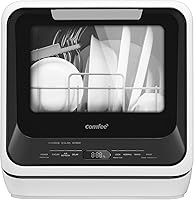
An RV countertop dishwasher can use as little as 2.77 gallons of water per cycle, based on figures from COMFEE' and Midea. How much water an RV dishwasher uses in a week depends on the model and how many loads you run.
On this page (13 sections)
- How much water a countertop RV dishwasher uses per cycle
- What a tank model uses and what that means for an RV
- Faucet hookups on an RV sink
- Space and clearance above the unit
- Noise during a cycle
- Power for an RV dishwasher
- How to use less water per RV dishwasher load
- Estimating your RV dishwasher water use each week
- Fresh and gray water tanks in an RV
- What the ENERGY STAR label covers
- Is an RV dishwasher less water than handwashing?
- Questions to ask before you buy an RV dishwasher
- Picking an RV dishwasher for your water use
A countertop dishwasher made for RVs can use as little as 2.77 gallons of water per cycle, based on figures from COMFEE' and Midea.
How much water an RV dishwasher uses in a week depends on that number, the program you pick and how many loads you run. A model that does not give a gallon figure needs a check of its manual.
This guide shows what the tank sizes mean, how a tank model gets its water, and how to turn a per-cycle figure into a weekly total. It covers countertop and portable units only, not built-in RV drawers.
For the wider picture, see our countertop and portable dishwashers guide.
How much water a countertop RV dishwasher uses per cycle
Two brands give a 2.77-gallon figure. COMFEE' says its 6-place model uses as little as 2.77 gallons per cycle, and Midea gives the same 2.77 gallons for its 6-place model.
Both makers say their models are ENERGY STAR certified. The Midea weighs 25.3 lb and the COMFEE' weighs 46 lb, which matters if you lift the unit in and out of a cabinet.
A per-cycle number describes one run, not a week of dishes. Programs can differ too, so check the manual for the program you run most.
What a tank model uses and what that means for an RV
A tank model uses the water you pour in, so the tank size sets how much one fill can supply. You refill it by hand whenever it runs low.
COMFEE' gives its 1.32-gallon model a built-in tank that you fill with the water filling guide in the box. The same model also connects to a faucet with the included hose and adapter.
COMFEE' says it uses one third of the water of handwashing. That is the brand's claim, so compare it with your own habits before you rely on it.
EUHOMY's 5-liter model also has a built-in tank, and its water-level indicator shows when it is ready. It connects to a faucet too, which saves refills when a faucet is handy.
EUHOMY says its ECO program suits small loads and that the unit is designed to use less water than typical handwashing. It does not give a gallon figure per cycle, so you can't plan a weekly total from its numbers alone.
Brands describe water in different ways. One gives a tank size, another gives a per-cycle figure, so check the manual to learn how many cycles one fill covers on your model.
Best countertop dishwashers with a water tank compares seven tank models side by side.
Faucet hookups on an RV sink
A faucet hookup removes most refills, but it depends on your faucet, so check your faucet first. Adapters fit some faucets and not others, so match the connection before you buy.
EUHOMY says its 5-liter model works with G3/4-inch faucet connections and needs a faucet adapter bought separately. COMFEE' says its 6-place model connects to a faucet directly with a suitable adaptor.
Check your RV's faucet type, its thread size and whether it is a pull-down or spray faucet. Then follow the maker's manual for the hookup, and stop if the connection does not fit.
If a hookup would mean changing your RV's plumbing, ask a licensed plumber or an RV technician instead of doing it yourself.
Space and clearance above the unit
Countertop units need room above them, so measure the gap before you buy. The COMFEE' 1.32-gallon model asks for more than 19.6 inches between the countertop and the wall cupboard, and EUHOMY recommends more than 19 inches of vertical clearance.
Sizes vary, so compare the dimensions before you pick a unit.
- COMFEE' 1.32-gallon: 17.13 inches deep, 16.53 inches wide and 17.24 inches high.
- EUHOMY 5-liter: 16.85 inches deep, 16.73 inches wide and 18.03 inches high.
- Midea 6-place: 20 inches deep, 22 inches wide and 17.25 inches high.
Depth matters in a small RV, since a unit that sticks out past the counter can block a walkway. Small homes face the same limits, so see best dishwashers for tiny houses and small kitchens.
Noise during a cycle
Noise matters in a small RV, and the brands give decibel figures for their models. EUHOMY gives 40 dB for its 5-liter model, and Midea and COMFEE' both give 52 dB for their 6-place models.
COMFEE' gives 62 dB for its 1.32-gallon model. Those are the brands' own figures, so treat them as a guide.
Cycle length matters on a trip too. EUHOMY says its Quick program takes 29 minutes, and COMFEE' says its Speed program takes 45 minutes.
Power for an RV dishwasher
Every unit here needs an outlet, even a tank model with no faucet hookup. Check the power requirement in the manual, and confirm that your RV's outlet, inverter or generator can supply it.
If you plan to run a dishwasher off a generator or a battery system, ask an RV technician or a licensed electrician about the load instead of guessing.
Midea's delay start runs from 1 to 24 hours. That lets you choose the hour a load runs, such as when you are plugged in at a campsite.
COMFEE' gives 174 kilowatt-hours per year for its 6-place model. Energy use is a separate number from water use, so look at both.
How to use less water per RV dishwasher load
The biggest saving comes from running full loads, since the per-cycle figure covers one run whether the racks are full or not. A few habits help on top of that.
- Scrape plates into the trash instead of rinsing them under the tap.
- Wait until the racks are full before you start a cycle.
- Pick the shortest program that cleans the load.
- Fill a tank model to the line in the manual, not past it.
Estimating your RV dishwasher water use each week
Multiply the water per cycle by the number of cycles you run in a week, then compare the total with your fresh water tank. That gives you a rough number for planning, and the method works for any model that gives a per-cycle figure.
How much water an RV dishwasher uses in a week
If a model uses 2.77 gallons per cycle and you run one load a day, that comes to about 19 gallons a week. This is an example, not a measurement, so use your own numbers.
Two loads a day doubles that total, which is why the load count matters as much as the model.
| Loads per day | Loads per week | Water per week at 2.77 gallons per cycle |
|---|---|---|
| 1 | 7 | about 19 gallons |
| 2 | 14 | about 39 gallons |
| 3 | 21 | about 58 gallons |
The table is arithmetic from the 2.77-gallon brand figure, so treat it as a plan, not a measurement.
Counting loads and refills
Count every load, including quick rinse cycles, since each one draws water. A tank model needs refills, so plan them around the load count.
Write the weekly total down, then divide your fresh tank size by the daily amount to see how many days one tank covers for dishes alone. Your RV's manual gives the tank size.
Fresh and gray water tanks in an RV
The fresh water tank supplies the water, and the gray water tank holds waste water from sinks. In most RVs the sink drains to the gray tank, so a dishwasher's drain water adds to that tank.
Count the dishwasher's drain water when you plan how often to empty the gray tank. Check your RV's tank sizes in its manual, since they differ by model.
A countertop unit with no plumbing still needs power and a place for the drain water to go. For how these setups work, see countertop dishwasher with no plumbing.
What the ENERGY STAR label covers
ENERGY STAR looks at both energy and water use for dishwashers, so the label is a useful check on a brand's claim. Look for it on the model before you buy, and compare the per-cycle figures side by side.
Midea and COMFEE' both say their 6-place models carry the label. You can read more about the program at ENERGY STAR.
Is an RV dishwasher less water than handwashing?
It can be when you run full loads, but the 2.77-gallon figures don't come with a handwashing number to compare against. Your own habits decide the result, so compare the per-cycle figure with what you use now.
For a full comparison, see dishwasher vs hand washing water use.
Questions to ask before you buy an RV dishwasher
Before you buy, check the power, the faucet, the clearance, the tank and the drain route. Each one can rule out a model that looks right on paper.
- Power: check the power requirement in the manual, and confirm that your RV can supply it.
- Faucet: check the faucet type and thread, and whether you need a separate adapter.
- Clearance: measure the gap above the counter, since COMFEE' asks for more than 19.6 inches and EUHOMY recommends more than 19 inches.
- Tank: compare the tank size with the water per cycle and your load count.
- Drain route: confirm where the sink drain goes and how often the gray tank needs emptying.
Work through the list before you compare features across models.
Picking an RV dishwasher for your water use
Pick a tank model if you have no sink hookup and you can refill by hand. Pick a faucet-fed model if your RV sink has a faucet you can connect to, and check your faucet first.
Read the per-cycle figure and the tank size together. The tank size tells you how often you will refill, and the per-cycle figure tells you how much water each load asks for.
For RV-sized options, see best countertop dishwashers for RVs and campers.
Frequently asked questions
How much water does an RV dishwasher use?
Some countertop models made for RVs use as little as 2.77 gallons per cycle, according to COMFEE' and Midea. Your weekly total depends on the model, the program and how many loads you run, so check the manual for your own figure.
Does a countertop dishwasher drain into the RV gray tank?
In most RVs, the sink drain feeds the gray water tank, so the dishwasher's waste water usually ends up there too. Follow the dishwasher maker's manual for the drain setup, and check your RV's gray tank size in its own manual.
Can I run a countertop RV dishwasher without a hookup?
Yes, many models have a built-in tank that you fill by hand, so no faucet connection is needed. You still need power and a place for the drain water to go, and the tank size limits how much water one fill can supply.
Do I need a faucet hookup for an RV dishwasher?
No, a tank model runs without one, but you refill the tank by hand every time it runs low. A faucet-fed model needs a hookup, so check your faucet first, including the thread and whether it is a pull-down or spray faucet.