Are Countertop Dishwashers Worth It? An Honest Look
Countertop dishwashers are worth it for one to three people with little counter space. Big families and large pots are the usual reasons to skip one.
On this page (10 sections)
- Are countertop dishwashers worth it for a small household?
- How do the three models compare?
- Who should skip a countertop dishwasher?
- How much water and time do countertop dishwashers save?
- Do countertop dishwashers need a faucet or a tank?
- Will a countertop dishwasher fit your kitchen?
- What upkeep does a countertop dishwasher ask for?
- What do you give up with a countertop model?
- When is a countertop dishwasher the better buy?
- Is a countertop dishwasher worth it for you?
Countertop dishwashers are worth it for small households, renters and RV owners who want a machine that doesn't need a permanent install. The three models here hold 4 to 6 place settings or 30 or more items, which covers a small household's daily meals.
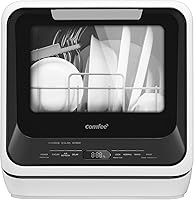
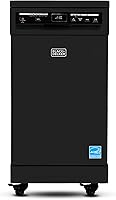
The real question is how many dishes you wash and what your sink and counter allow. We compared three countertop models: the COMFEE' 1.32-gallon unit, the HAVA 5-liter unit and the BLACK+DECKER BCD6W.
For the wider picture, start with our countertop and portable dishwashers guide.
Are countertop dishwashers worth it for a small household?
For one to three people, a model with 4 to 6 place settings usually covers daily meals. Larger households will feel the rack size sooner.
The HAVA holds four full place settings, and it fits plates up to 11 inches when they are loaded at an angle.
BLACK+DECKER says the BCD6W holds six place settings, with dinner plates up to 10 inches. COMFEE' rates its 1.32-gallon unit at 30 or more items, with plates up to 9.5 inches.
Is a countertop dishwasher worth it for two people?
Yes, for two people who cook at home, a rack of four to six place settings usually keeps up with a day of meals. A tank model still needs a refill before each run, so plan for that as part of the routine.
A faucet model skips the refill, but it needs a sink close by to drain into.
How do the three models compare?
The BLACK+DECKER has the most place settings and the largest footprint, while the COMFEE' and HAVA are about 17 inches square. The table puts the main numbers side by side.
| Feature | COMFEE' 1.32-gallon | HAVA 5-liter | BLACK+DECKER BCD6W |
|---|---|---|---|
| Capacity | 30 or more items | 4 full place settings | 6 place settings |
| Plate limit | 9.5 inches | 11 inches at an angle | 10 inches |
| Water | Built-in tank or faucet hose | Built-in tank or faucet hose | Faucet quick connect |
| Size, D x W x H (in) | 17.13 x 16.53 x 17.24 | 16.8 x 16.7 x 18 | 21.5 x 21.7 x 17.2 |
| Weight | 36.6 lb | 28.7 lb | 46.2 lb |
| Programs | 6 programs | 6 programs | 7 cycles |
All three sit in the budget to mid-range tier, so the question is how often you'll use one, not whether it's a bargain. The HAVA is the lightest at about 28.7 pounds, and the BLACK+DECKER is the heaviest at 46.2.
Weight matters if you plan to move the unit between homes or to a different counter. A lighter unit is easier to lift onto a shelf or into a cabinet for the move.
Who should skip a countertop dishwasher?
Large families and cooks who use big pots every day usually find these racks too small. Four people who eat three meals at home can need two runs a day from a rack of four to six place settings.
Each extra run means another fill for a tank model, which adds up over a week.
How to tell if your household fits
Count how many people you cook for on a normal day, not on a holiday. Then count the place settings you use at each meal, since that decides how often the rack runs.
A household of one or two usually fits within one rack a day. A household of four or more usually needs more runs, and that is when refilling a tank starts to feel like work.
Big pots and large platters
BLACK+DECKER says its rack takes long oval or oblong serving platters, while round dinner plates top out at 10 inches.
A big stockpot or a wide sheet pan may not fit any of the three, so measure your biggest pot first.
How much water and time do countertop dishwashers save?
Countertop dishwashers can use less water than hand washing, but the savings depend on running full loads. The figures below come from the brands, so read them as their claims.
HAVA says its 5-liter tank model uses 5 liters per wash cycle, which it puts at about a quarter of the water used by hand washing. A full load gets more dishes clean per cycle, so it uses water more efficiently than a half load.
Cycle length, detergent and energy use
The BLACK+DECKER offers seven cycles, including Eco, Rapid and a 90-minute option, so you can pick a shorter run when you need dishes sooner.
Detergent is the other ongoing cost. Our detergent guide explains the types you can use, while the maker's manual sets the amount.
BLACK+DECKER says the BCD6W is Energy Star certified. Energy Star is a federal efficiency label for appliances, and you can read what it covers at energystar.gov.
Do countertop dishwashers need a faucet or a tank?
The COMFEE' and HAVA each have a built-in tank and can also connect to a faucet. The BLACK+DECKER connects to a faucet with its quick-connect assembly.
The two tanks hold about 5 liters, the same amount HAVA says one wash cycle uses, so plan to refill before each run.
A tank model needs no hookup, but it still needs power and a place for the waste water to go. Our countertop dishwasher with no plumbing guide explains how that setup works in practice.
Check your faucet first
Before you buy a faucet model, check your faucet first. Look at the aerator, and note if the faucet is a pull-down or spray type, then follow the maker's manual.
BLACK+DECKER includes a faucet adapter and a drain hose, and it says the unit works anywhere with a faucet and an outlet nearby. Our BLACK+DECKER BCD6W review goes through the model in more detail.
Will a countertop dishwasher fit your kitchen?
Measure the gap above the counter and the room for the drain connection before you buy, since both decide whether the unit fits. The BLACK+DECKER has the largest footprint of the three, at 21.5 by 21.7 inches.
COMFEE' asks for more than 19.6 inches between the countertop and the wall cupboard, so measure that gap first. Each of the three comes with a drain connection, so you also need a sink or drain close enough for the hose to reach.
What comes in the box
The COMFEE' includes a quick-connect inlet hose with an adapter, a drain, a fruit basket and a water pitcher. The HAVA includes an inlet hose, a drain hose, a cutlery basket and a user manual.
BLACK+DECKER describes a quick-connect assembly with a drain hose and a faucet adapter. Check what your model includes before you buy extra parts, since a missing adapter can hold up the whole setup.
Before you buy, check three things:
- The gap above the counter, measured to the lowest cabinet.
- The open space in front of the unit, so the door can drop down fully.
- The distance from the unit to the sink, so the drain hose can reach.
Check the exact size before you order.
What upkeep does a countertop dishwasher ask for?
Upkeep is light but regular: filters to clean, a tank to fill and a drain route to keep clear.
The BCD6W has a three-part filter assembly (main, fine and coarse). BLACK+DECKER recommends cleaning all of it once a week if you run the unit every day.
A tank model adds a refill before each run and a place for the waste water to go. If a drain ever slows down, the portable dishwasher not draining guide covers the simple checks.
What do you give up with a countertop model?
You give up some capacity and some convenience, and every model takes up counter space. Those trade-offs are what decide whether the purchase is worth it for your home.
Capacity is the first thing you give up, since a rack of four to six settings holds less per run. Convenience is the second, because a tank model needs a refill before each run.
COMFEE' gives 62 dB for its 1.32-gallon unit, so a shared living space is worth weighing before you buy. A countertop unit also takes up part of your counter all the time, even when it's switched off.
When is a countertop dishwasher the better buy?
A countertop model is the better buy when you rent, move often or have no room for a full-size unit. It doesn't need a permanent install, so you can take it with you when you move.
What a rental kitchen asks of you
Renters often can't change the plumbing, which makes a countertop or portable unit the simpler choice. Ask your landlord before any change, even a small one.
A countertop unit sits on the counter and drains into a sink, so it needs no change to the kitchen itself. Best countertop dishwashers for apartments lists models that suit a rental kitchen.
RV owners and tiny-home owners have little room, and a countertop unit only needs the counter it sits on. If you're choosing between a countertop model and a rolling portable, see countertop vs portable dishwasher.
Is a countertop dishwasher worth it for you?
Buy one if you cook for one to three people, have little counter space and want no permanent install. Skip one if you cook for a large family most days or use big pots often.
Pick a tank model if you want no faucet hookup and don't mind refilling before each run. Pick a faucet model if a sink sits close by and you want six place settings.
Pick a larger machine if your daily load regularly goes past six place settings. For a shortlist, see best countertop dishwashers with a water tank.
Frequently asked questions
Are countertop dishwashers worth it for one or two people?
Usually, yes, because a model with 4 to 6 place settings covers daily meals for a small household and needs no permanent install. The trade-off is a tank to fill by hand or a faucet hookup, so decide which of those you can manage before you buy.
Do countertop dishwashers save water?
They can, according to the brands, and HAVA says its 5-liter tank model uses about a quarter of the water hand washing uses. Savings depend on full loads, because a half-full rack still runs a full cycle for fewer dishes.
Do countertop dishwashers fit large pots?
Large pots often will not fit, since plate limits run from 9.5 to 11 inches across these models. BLACK+DECKER says its dinner plates can be up to 10 inches, so measure your biggest pot and the rack space before you buy.
Do countertop dishwashers need a plumber?
A tank model needs no hookup because you fill it by hand, but it still needs power and a place to drain. A faucet model connects with an adapter and a drain hose, so check your faucet first and ask a licensed plumber before any change to your plumbing.