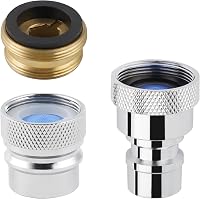
How to Hook Up a Portable Dishwasher to Your Faucet
To hook up a portable dishwasher to your faucet, check the faucet first, fit the right adapter, connect the inlet and drain hoses, and test for leaks. Follow the maker's manual for every step.
On this page (12 sections)
- Check your faucet before you buy an adapter
- What you need before you start
- How to hook up a portable dishwasher step by step
- Quick-connect models
- Hoses: inlet and drain
- Common mistakes to avoid
- Tank models skip the hookup
- After the cycle: disconnect and store
- Sink placement and clearance
- When a hookup goes wrong
- Who should skip a faucet hookup
- Decide how to hook up a portable dishwasher
Here is how to hook up a portable dishwasher: check your faucet first, fit the right adapter, connect the inlet hose, run the drain hose to the sink and test for leaks.
Most faucet-fed models use an adapter on the faucet end, an inlet hose to bring water in, and a drain hose that runs to the sink. Follow the maker's manual for every step, because each model sets its own hose fittings and drain height.
This guide covers faucet-fed portable and countertop models only. It does not cover tank models, which need no hookup, or any change to your pipes.
For the full comparison of types, read the countertop and portable dishwashers guide.
Check your faucet before you buy an adapter
Your faucet decides which adapter fits, so check it before you order anything. Look at the aerator, the thread size and the type of head.
Aerator, pull-down or spray: what to look for
Look at the tip of your faucet and note three things: whether the aerator screws off, whether the head pulls down, and whether the head sprays. Pull-down and spray heads can change the fit, so compare them with the adapter's notes before you buy.
Piumeif asks buyers to check the inner diameter of the hose end before ordering, and that is a good habit for any adapter. The faucet fit guide goes deeper on aerator types.
Thread sizes: 15/16-27 and 55/64-27
Two thread sizes come up again and again, so compare them with the maker's notes rather than your memory of the faucet. The Hygie Rinse pack and the Garsoo hose kit both use 15/16-27 and 55/64-27.
The Garsoo kit's faucet adapter has a 15/16-27 external thread and a 55/64-27 internal thread. Its two hose connectors have internal threads of 23/32 inch and 61/64 inch, so check which one fits your dishwasher's inlet.
Check the water pressure range
Check that your home's water pressure falls inside the range your maker gives. COMFEE' gives 0.04 to 1.0 MPa for its tank model, and BLACK+DECKER gives 5.8 to 14.5 psi for the BCD6W.
If you do not know your pressure, or it falls outside the range in the manual, ask the maker or a licensed plumber before you connect anything.
What you need before you start
You need the dishwasher, its inlet and drain hoses, a faucet adapter that matches your faucet, and a dry towel. Keep the manual nearby, since it sets the drain height limit and the steps for your model.
- The portable dishwasher with its inlet hose and drain hose.
- A faucet adapter that matches your faucet. Some faucet adapters are sold as parts for several brands, so check the compatibility notes.
- Rubber washers or sealing tape, if your kit includes them.
- A dry towel and a shallow pan for drips.
- The maker's manual, with the drain height limit marked.
How to hook up a portable dishwasher step by step
Turn off the faucet, unplug the dishwasher, fit the adapter, connect the inlet hose, route the drain hose to the sink, and then test. Work in that order, and stop if a step does not fit.
Turn off the faucet and unplug the unit
Shut off the faucet and unplug the dishwasher before you touch any hose. Unplugging comes first for any check or connection, so make it the first step every time.
Hook up a portable dishwasher to the faucet
Fit the adapter to the faucet end, using the washer or sealing tape your kit includes. Follow the adapter's instructions on whether the aerator comes off first, and hand-tighten it so it sits straight before you turn on any water.
The adapter should sit snug on the faucet without forcing it. If it will not seat, stop and check the fit rather than tightening harder.
Connect the inlet hose
Attach the inlet hose from the dishwasher to the adapter, and tighten the fitting by hand. The inlet hose carries water from the faucet to the unit, so keep it free of kinks.
Route the drain hose to the sink
Run the drain hose into the sink and keep it free of kinks along the way. Follow the manual's maximum drain height, because a hose set too high can make draining harder.
If the route is awkward, compare hose lengths before you buy, so the hose reaches without strain.
Test for leaks before a full load
If the manual allows it, run a short cycle with no dishes, and watch each joint with the towel nearby. If a joint drips, turn off the faucet, unplug the unit and tighten the fitting as the manual describes.
Quick-connect models
A quick-connect model attaches to the faucet through an assembly that comes in the box, but you still check the faucet first. The BLACK+DECKER rolling model uses this setup and includes an adapter, so you do not need to buy one separately.
Its hose is 59 inches, so measure from the faucet to the spot where the unit will sit before you roll it into place. Leave some slack in the hose so it is not pulled tight at either end.
The BLACK+DECKER BCD6W countertop model works the same way, with a quick-connect assembly, a drain hose and a faucet adapter. BLACK+DECKER says it can be used anywhere with a faucet and an outlet nearby, and the water drains to a nearby sink.
Our BLACK+DECKER BCD6W review covers that model's hookup in more detail.
Hoses: inlet and drain
The inlet hose brings water in, and the drain hose sends waste water out. A complete kit includes both, plus a faucet adapter, so you do not have to match parts from different sources.
The Garsoo kit's total length is 6 feet, and Garsoo gives a 1-year warranty. Garsoo also says the kit fits all major brands, so confirm the fit against your own dishwasher's inlet.
Hose length is not the same as reach. Measure the route from the faucet to the sink and the path to the dishwasher, then compare your numbers with the hose kit options.
Common mistakes to avoid
Most hookup problems start with a skipped check, so watch for these five mistakes.
- Connecting the hoses before you check the faucet thread and the water pressure.
- Tightening a fitting with force instead of checking the fit first.
- Setting the drain hose above the height limit in the manual.
- Plugging in the unit before every connection is seated.
- Skipping the leak test after the first run.
Tank models skip the hookup
A tank model needs no hookup at all, because you fill the tank by hand. The COMFEE', HAVA, Hermitlux, EUHOMY and NOVETE tank models also offer a faucet mode, so you connect a faucet only if you want to.
EUHOMY says its tank model fits G3/4-inch faucet connections and asks buyers to buy a faucet adapter separately. COMFEE' says an adapter comes with its tank model.
If your faucet cannot take an adapter, a tank model may be the simpler choice. The water tank vs faucet hookup comparison lays out what each setup asks of you.
The countertop dishwasher with no plumbing guide explains how a tank model runs without a water line.
After the cycle: disconnect and store
Turn off the faucet and unplug the unit when the cycle ends. BLACK+DECKER says you connect the BCD6W when you need clean dishes and disconnect it when you do not.
Take the adapter off the faucet if the manual says to, and keep it with the hoses so it does not get lost. A rolling model is easier to move with the hoses coiled loosely, not kinked.
Sink placement and clearance
Placement depends on the model, the hose reach and the maker's manual. Most countertop models are set on a counter or table, and placing one under a sink needs a close look at the hoses and the drain.
Read Can You Put a Countertop Dishwasher Under the Sink? before you decide where the unit goes. If the spot needs any change to the sink area, ask a licensed plumber first.
When a hookup goes wrong
Unplug the unit first, then check the hose kinks, the fittings and the sink drain. If a leak or a slow drain keeps happening, contact the maker or a repair pro rather than opening pipes or changing wiring.
A drain that will not empty often traces back to the hose route or a clogged sink drain. The portable dishwasher not draining guide covers the simple checks.
The Consumer Product Safety Commission publishes general safety guidance for appliances at cpsc.gov. Use that for background, and let the maker's manual decide every step for your model.
Who should skip a faucet hookup
Skip a faucet hookup if your faucet does not take an adapter, if your landlord does not allow changes to the kitchen, or if you want no connection at all. In those cases, a tank model fits better.
A faucet hookup also suits people who are comfortable following a manual and checking a few fittings. If that does not sound like you, a tank model is the easier path.
Decide how to hook up a portable dishwasher
- Pick a faucet hookup if your faucet takes an adapter, your landlord allows changes, and you want the unit to run from the tap.
- Pick a tank model if your faucet will not fit, if your lease rules are strict, or if you want nothing connected at all.
Either way, check the faucet first, and follow the manual before you add any water. For a closer look at the fit, read the faucet fit guide.
Frequently asked questions
Do all portable dishwashers connect to a faucet?
No, tank models fill by hand and need no faucet connection, although many include an inlet hose if you want one. Faucet-fed models connect through an adapter or a quick connect, so check your faucet first and follow the maker's manual for each step.
Do I need a plumber to hook up a portable dishwasher?
Most faucet-fed setups use an adapter and hoses that come with the unit or match it, and the manual explains each step. If your faucet is unusual, or if a step would change a pipe or a wire, ask a licensed plumber or electrician before you go further.
What if my faucet does not fit the adapter?
Check your faucet's aerator type, thread size and head style, then compare them with the thread sizes the adapter's maker gives. If the fit is still unclear, ask the maker or a plumber, or choose a tank model that needs no faucet connection.
Why does the drain stop working after I connect the hose?
A kinked drain hose, a hose set above the manual's height limit or a clogged sink drain are the common causes to check first. Unplug the unit before any check, and if the problem keeps coming back, contact the maker or a repair pro.