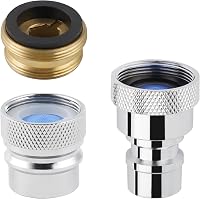
Water Tank vs Faucet Hookup Countertop Dishwashers
A water tank dishwasher runs on water you pour in, and a faucet model needs a countertop dishwasher faucet adapter that fits your sink. Check your faucet first, since the aerator, thread and spray style decide the fit.
On this page (14 sections)
- Tank or faucet: how each one gets its water
- Check your faucet first, before any countertop dishwasher faucet adapter
- The two models side by side
- Size, weight and counter fit
- Power, drain and the waste water
- Capacity, cycles and noise
- Daily routine: filling versus connecting
- What a tank model asks of you
- Setting up either one on day one
- Three kitchens, three answers
- Who each setup suits
- Who should skip each setup
- If you move, or share the unit between homes
- Countertop dishwasher faucet adapter or tank: which fits your sink
A water tank dishwasher runs on water you pour in, and a faucet hookup model draws water from your sink through a countertop dishwasher faucet adapter. Which one works for you depends mostly on your faucet.
This page sets the COMFEE' 1.32 gal tank model against the BLACK+DECKER BCD6W quick connect. It covers how each one gets water, what the faucet has to allow, and what both still need from your kitchen.
For the wider range of types, see our countertop and portable dishwashers guide.
 Best for a sink that is hard to reach
COMFEE' 1.32 Gal Tank Countertop Dishwasher
 Best for a six-place load at a faucet
BLACK+DECKER BCD6W Countertop Dishwasher
Tank or faucet: how each one gets its water
The COMFEE' runs from a built-in 1.32 gal tank that you fill by hand, while the BCD6W connects to a faucet with a Quick Connect assembly. One adds a fill step, and the other adds a faucet connection.
The COMFEE' tank routine
The tank holds 1.32 gal, which is 5 liters. COMFEE' includes a water pitcher and a filling guide, and says you can put the unit in any suitable place without tap water.
It can also run from a faucet. The box has a quick-connect inlet hose with an adapter, and COMFEE' gives a water pressure range of 0.04 to 1.0 MPa for faucet use.
The BCD6W faucet routine
The BCD6W has no tank. Its Quick Connect assembly hooks to the faucet, and the kit includes a drain hose and a faucet adapter.
BLACK+DECKER says you connect when you need clean dishes and disconnect when you're done, with no direct plumbing or permanent installation. Its water pressure range is 5.8 to 14.5 psi.
Tank units skip the faucet, but you still fill them, plug them in and drain the waste water. Faucet units skip the filling, but they depend on the faucet and a sink nearby.
Check your faucet first, before any countertop dishwasher faucet adapter
Check your faucet first, because the aerator type, the thread and whether it's a pull-down or spray model decide whether an adapter fits. This one step can change which dishwasher you buy.
An adapter has to match the faucet it goes on. If you can't tell which aerator you have, ask a licensed plumber or the faucet's maker.
What to note about your faucet
Write these down before you shop, because they narrow the choice fast.
- The aerator at the tip of the spout, and which type and thread it has.
- Whether the faucet is a pull-down model, or has a side spray.
- How much room there is between the spout and the counter spot you want to use.
- How far the faucet sits from the nearest outlet and the sink drain.
Follow each maker's manual for the connection itself. If your faucet needs a change to fit an adapter, ask a licensed plumber instead of working it out on your own.
For adapter picks that cover more faucet types, see our best faucet adapters for portable dishwashers. For the full routine, read how to hook up a portable dishwasher to your faucet.
Countertop dishwasher faucet adapter limits in a rental
A renter should check the lease before adding anything to a fixed faucet. If the landlord says no, a tank model keeps the faucet out of the picture.
The COMFEE' covers both cases. If your faucet won't take the adapter, the unit still runs from its tank.
To see what that setup involves, read how a countertop dishwasher with no plumbing works.
The two models side by side
The COMFEE' is the smaller and lighter unit, and the BCD6W holds the bigger load. The table shows the numbers that matter most for a faucet-or-tank choice.
| Product | Best for | Size | Weight | Hookup | Our score |
|---|---|---|---|---|---|
| COMFEE' 1.32 Gal Tank Countertop Dishwasher | a sink that is hard to reach | 16.5 W x 17.1 D x 17.2 H in | 36.6 lb | Tank, or faucet with adapter | 8.5 |
| BLACK+DECKER BCD6W Countertop Dishwasher | a six-place load at a faucet | 21.7 W x 21.5 D x 17.2 H in | 46.2 lb | Faucet quick connect, drain hose included | 7.8 |
We compared specs and features, then scored each unit against what a tank shopper or a faucet shopper needs. Our score weighs specs, features and buyer feedback against what you're shopping for.
The COMFEE' scores 8.5 and the BCD6W scores 7.8. The BCD6W gives up points for its weight and footprint, not for its faucet hookup.
Size, weight and counter fit
The COMFEE' weighs 36.6 lb and is about 16.5 in wide, while the BCD6W weighs 46.2 lb and is 21.7 in wide. Both sit on the counter, so the space you have decides which one fits.
The COMFEE' measures 17.13 in deep, 16.53 in wide and 17.24 in tall. COMFEE' says you need more than 19.6 in between the counter and the wall cupboard.
The BCD6W measures 21.5 in deep, 21.7 in wide and 17.2 in tall. That is 4 to 5 in more than the COMFEE' in both directions, so measure the width and depth of your spot before you order.
At 46.2 lb, the BCD6W is about 10 lb heavier than the COMFEE'. Plan on a second person if you move it often.
Measure from the faucet to the spot as well. The COMFEE' inlet hose is 1.44 ft long, so in faucet mode the unit has to sit close to the sink.
Power, drain and the waste water
Both models need an outlet and a place to drain the waste water, so plan both before you pick. A tank doesn't remove either need.
The BCD6W has a 5 ft power cord, and BLACK+DECKER says the water drains to a nearby sink. The drain hose is in the kit.
The COMFEE' also needs a drain, and the box includes one. Follow the manual for how to route it, and keep the hoses free of kinks.
Keep the power cord away from the water connections, and unplug the unit before you check any hose. If a leak keeps happening, contact the maker or a repair pro.
Capacity, cycles and noise
The BCD6W holds 6 place settings, and COMFEE' rates its unit for 30+ items with plates up to 9.5 in. Those two figures count different things, so match them to the dishes you wash.
The BCD6W takes dinner plates up to 10 in. That is half an inch more than the COMFEE' plate limit, which matters if your everyday plates run 10 in.
The COMFEE' has six programs, including Normal, Rapid, Fruit and Glass. It adds an Air Refresh mode that circulates air to keep the dishes and the machine dry, and COMFEE' rates the unit at 62 dB.
The BCD6W has seven cycles, including Normal, Eco, Glass and Rapid, plus a delayed start of up to 24 hours and a child lock. It also has a stainless steel interior and a rinse aid dispenser.
Daily routine: filling versus connecting
The tank model adds a fill step before each run, and the faucet model adds a connection step each time. Both add a little work, just different work.
For the COMFEE', fill the tank before each run and keep the pitcher near the sink. Wipe up spills right away and keep the area around the unit dry.
For the BCD6W, hook up the quick connect and look for drips before you start a load. BLACK+DECKER says to clean the whole filter assembly once a week if you run the dishwasher every day.
Use dishwasher detergent in both. COMFEE' says regular liquid dish soap causes problems, and BLACK+DECKER says its dispenser takes powder, tablet and pod detergents.
BLACK+DECKER says the BCD6W is Energy Star certified, and you can read what that label covers at energystar.gov.
What a tank model asks of you
A tank model still needs an outlet, a hand fill and a place for the waste water to go. The tank changes where the water comes from, not what the rest of the setup needs.
At 1.32 gal, the COMFEE' tank is small, so plan to refill it for each load. Keep the pitcher by the sink and fill the tank on a flat, level counter so nothing spills onto the cord.
That routine is easy for one or two people who run a load a day. It gets old fast for a family that runs two or three.
Setting up either one on day one
Set the unit on a flat, level counter, then read the manual's first-run steps before you add water or open the faucet. The manual outranks any general advice, including ours.
Check the hose routing and any drain length or height limit the manual gives. A hose that is set too high or left too long can cause drain trouble.
Unplug the unit before you check any hose or connection. Keep the manual with the unit, since most later questions are answered in it.
Three kitchens, three answers
The right setup follows the kitchen, so picture yours in one of these.
- A rental with a fixed faucet: a tank model keeps the faucet untouched. The COMFEE' also has the adapter if the landlord is fine with it.
- A standard faucet and a wide counter: the BCD6W fills itself from the sink, so you skip the pitcher. Its 21.7 in width needs the room.
- A far sink, or no sink in reach: the COMFEE' tank lets you set the unit near an outlet and carry water to it. You still need a drain spot for the waste water.
Who each setup suits
A tank model suits a far sink, a faucet that won't take an adapter, or a renter who can't change fixtures. A faucet model suits a kitchen where the adapter fits and a drain is close by.
A faucet model also saves you from carrying water. The BCD6W suits a household that runs fuller loads, since it holds six place settings, while the COMFEE' suits one or two people with smaller plates.
Who should skip each setup
Skip the tank model if you run full loads every day and don't want to fill by hand. The COMFEE' tank holds about 5 liters, so a busy kitchen will refill it often.
Skip the BCD6W if your faucet won't take the adapter or the sink is far from the spot. It is also the heavier unit at 46.2 lb, so skip it if you can't lift it or get help.
Skip either one if the waste water has nowhere to go. A dishwasher always needs somewhere to send its waste water.
If you move, or share the unit between homes
A tank model moves easily, because it only needs an outlet and a spot for the waste water. The BCD6W needs a faucet that takes the adapter, plus a sink to drain into, at every stop.
At 46.2 lb, the BCD6W is also the harder one to carry between homes. The COMFEE' weighs about 10 lb less and has no required faucet, which makes it the easier unit to take along.
If the faucet at the new place won't take the adapter, the BCD6W has no fallback. The COMFEE' still runs from its tank.
Countertop dishwasher faucet adapter or tank: which fits your sink
Pick the COMFEE' if the sink is hard to reach or your faucet won't take an adapter, and pick the BLACK+DECKER if your faucet fits and you want six place settings. Those two checks settle most of the choice.
- Pick the COMFEE' tank model if you can fill by hand and the sink is far.
- Pick the BCD6W if your faucet takes the adapter and you want a stainless steel tub with a 24-hour delayed start.
- Pick either one only after you've checked the faucet, the drain spot and the outlet.
For a closer look at the larger unit, read our BLACK+DECKER BCD6W review. For more tank models, see our best countertop dishwashers with a water tank roundup.
Frequently asked questions
What is the difference between a tank and a faucet countertop dishwasher?
A tank model holds water that you pour in by hand, while a faucet model draws water from your sink through an adapter. Both still need an outlet nearby and a place to drain the waste water, so neither one is fully hands-off.
Can a countertop dishwasher run without a faucet?
Yes, a tank model like the COMFEE' 1.32 gal unit runs on water you fill by hand, and COMFEE' includes a pitcher to help. It still needs power and a drain for the waste water, so plan a spot near an outlet and a sink.
What should you check before buying a countertop dishwasher faucet adapter?
Check your faucet first, including the aerator type, the thread and whether it's a pull-down or spray model. Follow the dishwasher's manual for the connection, and ask a licensed plumber if your faucet needs any change to fit an adapter.
Is a tank dishwasher easier in a rental?
It can be, because a tank model doesn't need anything attached to the faucet, which helps when you can't change fixtures. It still needs an outlet and a drain, so confirm both before you buy, and check your lease before you add anything to a fixed faucet.