How to Choose a Portable Dishwasher for an Apartment
To choose a portable dishwasher for an apartment, measure your space, decide how it gets water and match the place settings to your household. Noise and your lease rules come next.
On this page (11 sections)
- Measure the space before you shop
- Plan the weight and the route in
- Choose how the dishwasher gets water
- Pick the place settings for your household
- Compare the four models side by side
- Check the hose reach on a rolling model
- Noise, energy and water: what the figures show
- Renter rules before you connect to a faucet
- Every model needs power and a drain
- Common mistakes to avoid
- Pick the portable dishwasher for an apartment that fits your space
To choose a portable dishwasher for an apartment, measure your space, decide how the unit gets water and match the place settings to the people you cook for. Those three choices rule out most models before you read a single feature list.
Noise, weight and your lease come next. The steps below follow the order that narrows the field fastest, and the countertop and portable dishwashers guide covers the full range.
We compared the specs of four models to show how each step plays out. They're examples to learn from, not a ranking.
Measure the space before you shop
Measure the counter depth, the width you can spare and the height from the counter to the lowest cabinet edge. Those three numbers show which models can work at all.
What a portable dishwasher needs in an apartment
A countertop model needs clear space above it as well as counter room underneath. COMFEE' says its mini needs more than 19.6 inches between the countertop and the wall cupboard.
Both COMFEE' countertop models stand about 17 inches tall, so check that gap first. Measure to the lowest part of the cabinet, including any shelf or range hood that hangs lower.
Leave a little extra room so the door opens all the way. If you're still weighing a countertop model against a rolling one, countertop vs portable dishwasher explains the difference.
Width, depth and the floor path
Measure the exact spot where the unit will sit, not the whole kitchen. A countertop model needs a flat surface with nothing hanging over the edge, and a rolling unit needs a clear floor path to the sink.
Note where the outlet sits, so the power cord reaches without a stretch. Our small dishwasher dimensions guide explains which numbers to take before you shop.
If you want a visual check, mark the footprint on the counter or floor with painter's tape.
A measuring checklist for your kitchen
Write down each of these before you compare models.
- Counter depth, from the wall to the front edge.
- Open width of the spot, measured at the counter edge and at the back.
- Height from the counter to the lowest cabinet edge, with any hood or shelf included.
- Doorway and hallway width on the route the unit will take.
- Distance from the sink to the outlet, and to the faucet if you plan to connect one.
If the wall isn't straight, the width at the back and at the front can differ. Use the smaller number so the unit clears both.
The doorway number matters most for a heavy rolling unit, since it has to clear every frame and corner on the way in.
Plan the weight and the route in
Check the weight and the route in before you buy, because portable doesn't mean light. The heaviest model in this guide weighs more than three times as much as the lightest.
Plan the route from your door to the kitchen before you buy a rolling model. Thresholds, tight corners and stairs make a heavy unit hard to move, even on wheels.
Think about how often you'll move it and who will do the work. A unit that rolls out for every load asks more of you than one that stays put, and a helper makes a 90-pound unit far easier to handle.
For more rolling options, see best portable dishwashers on wheels. The weight of each model is in the comparison table further down.
Choose how the dishwasher gets water
A tank model takes water you pour in by hand. A faucet model connects to a tap with an adapter and a hose, so your faucet decides whether it fits.
Pick a tank model if you'd rather skip the faucet connection. Pick a faucet model if you don't want to fill anything by hand.
Tank models: you fill them by hand
COMFEE' says its mini has a 1.32-gallon built-in tank that you fill by hand, using the water filling guide that comes with it.
Filling by hand means carrying water from the sink whenever the tank runs low. Think about how far that trip is in your kitchen before you choose a tank model.
A tank model still needs an outlet, and its waste water still needs a place to go. Plan for the drain at the sink, and check how far the drain hose reaches before you set it up.
The countertop dishwasher with no plumbing guide explains how the tank route works. For a closer look at one, read our COMFEE' countertop dishwasher review.
Faucet models: check your faucet first
A faucet model runs from your tap, so check your faucet first. Look at the aerator, the thread and whether the faucet pulls down or has a spray head.
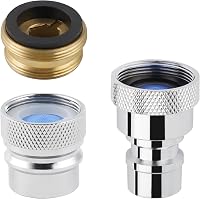
COMFEE' says its 6-place model connects to a faucet with a suitable adapter, and a faucet adapter and quick connect come in the box. BLACK+DECKER says its Quick Connect assembly hooks to a faucet with no permanent installation.
Hamilton Beach says its model is easy to connect to a kitchen tap. The only box contents named for it are the dishwasher and its racks, so ask about an adapter before you plan around a faucet hookup.
Our fit guide for portable dishwasher adapters walks through thread sizes and faucet types one step at a time.
Follow the maker's manual for any connection. If a step would change your plumbing, ask a licensed plumber first.
Pick the place settings for your household
Six place settings suit two or three people, and eight suit a larger household or one that cooks most nights. Count what you wash on a normal day before you choose.
COMFEE' sizes its 6-place model for two or three people. It says the unit fits up to 70 pieces of tableware, with plates up to 10 inches across.
Count place settings, not items
A place-setting count and an item count measure different things. COMFEE' says its mini washes 30 or more items, with plates up to 9.5 inches across, which is not the same as a place-setting figure.
Add up one normal day's dishes before you compare: plates, bowls, glasses and the pot you use most. Then choose the model that holds that load in one run.
A smaller rack means more loads, so the place-setting count also sets how often you run the unit.
Check the racks for your dishes
BLACK+DECKER says its upper rack adjusts for taller dishes, which helps if you own tall glasses, mugs or serving bowls.
The mini tops out at 9.5-inch plates, so a larger dinner plate may not fit it. Keep that number in mind when you pack the rack.
Compare the four models side by side
The mini is the smallest and lightest model, and the BLACK+DECKER is the heaviest at 116 pounds. The Hamilton Beach has the deepest footprint, at 19 inches wide and 27 inches deep.
| Model | Width x depth x height | Weight | Water |
|---|---|---|---|
| COMFEE' mini countertop | 16.5 x 17.1 x 17.2 in | 36.6 lb | 1.32-gallon tank or faucet |
| COMFEE' 6-place countertop | 21.7 x 19.7 x 17.2 in | 46 lb | Faucet, with an adapter |
| BLACK+DECKER 18-inch | 23.6 x 17.6 x 35.6 in | 116 lb | Faucet, Quick Connect |
| Hamilton Beach 19-inch | 19 x 27 x 38 in | 90 lb | Faucet |
Use the table as a starting point, then hold it against the space you measured. The BLACK+DECKER is sold as an 18-inch model, yet it measures 23.6 inches wide, so go by the numbers and not the name.
Hamilton Beach says its model fits under most kitchen cabinets, but it stands 38 inches tall. Measure your own counter and cabinet heights before you order.
Which size suits one or two cooks
For one or two cooks, the two COMFEE' models are the more practical sizes. Both weigh far less than either 8-place rolling unit.
The mini suits a single person who washes a small load each day. The 6-place suits a couple who cook most nights and want the rack to hold a full evening of dishes.
Which size suits a bigger household
An 8-place rolling unit suits a household that runs full loads most days and has room to park it. Both rolling models weigh 90 pounds or more, so plan how you'll move one.
Check the hose reach on a rolling model
A rolling model has to sit within reach of its hose, so the hose length sets how close it must roll to the sink. The BLACK+DECKER's hose is 59 inches, and the COMFEE' mini's hose is 1.44 feet.
If the mini runs from the faucet, it has to sit very close to the sink. That short hose is one more reason to look at its tank route first.
Where the unit lives between loads
A rolling unit can roll out for loading and back against a wall afterward, which keeps the counter clear most of the day. Pick a spot that works both ways, and make sure the path between the two stays clear.
If you store a rolling unit in a closet, measure the closet door and the path to it.
Noise, energy and water: what the figures show
COMFEE' gives noise figures of 62 decibels for the mini and 52 for the 6-place. A 10-decibel gap sounds roughly twice as loud to most people, so the 6-place is the quieter model on those numbers.
There is no decibel figure for the BLACK+DECKER. Hamilton Beach's data shows 1 decibel, which can't be right for a running dishwasher, so ask the maker for a real number.
Noise matters most when the kitchen shares a wall with a bedroom or a studio living area. If that's your layout, get a real figure before you buy.
Quieter isn't always better. Compare noise with the place settings and the water method before you decide.
Energy and water
COMFEE' says its 6-place model is an Energy Star model, with an energy use of 174 kilowatt-hours a year. It also says the unit uses as little as 2.77 gallons of water per cycle.
Hamilton Beach gives its model 200 kilowatt-hours a year. That is more than the 6-place, but the Hamilton Beach also holds more place settings.
The Energy Star program explains what its label covers, so you can check a label yourself.
Renter rules before you connect to a faucet
Ask your landlord before you connect anything to a faucet, since a lease can limit changes to the sink. A tank model skips the faucet question entirely.
Portable units don't need a permanent install, which makes them easier to use in a rental. Can you install a portable dishwasher permanently? covers that question in more detail.
Get any approval in writing, so you have a record if the lease comes up later. Describe the unit, its size and whether it connects to the faucet, since a clear note makes a yes easier to give.
Portable dishwasher vs built-in: what renters should know compares the two options for renters.
What to do when you move out
A portable unit leaves with you, so you won't plan a removal the way you would for a fixed install. Follow the manual for emptying and draining before you pack it.
Every model needs power and a drain
Every model in this guide needs an outlet, and its waste water needs a place to go. Those two needs decide where a unit can sit, so measure them along with the counter.
Start with the outlet. Note where it is and how far the cord must reach, since the unit can't sit where the cord can't follow.
Then look at the drain. Find the sink connection, and check that it sits close enough for the drain hose to reach.
Common mistakes to avoid
Three mistakes are easy to make in a small kitchen: measuring the wrong spot, counting items instead of place settings and assuming a faucet connection will work. Each one is simple to avoid if you check before you buy.
Measuring the wrong spot
People often measure the cabinet and forget the counter. Measure the spot where the unit will sit, including the space it needs at the back for the hose and cord.
Counting items instead of place settings
A 30-item figure and an 8-place figure don't measure the same thing. Compare place settings with place settings, and plan for pots and pans separately, since they take more room than plates.
Assuming the faucet connection works
Faucet models depend on your faucet, and the adapter in the box may not match it. Confirm the thread and the hose end before you plan around a faucet connection.
Pick the portable dishwasher for an apartment that fits your space
Choose by your space and your water source first, then by place settings and noise. Each of the four models suits a different kind of apartment.
- Pick the COMFEE' mini if your counter gap is more than 19.6 inches and you'd rather fill a tank than use a faucet.
- Pick the COMFEE' 6-place if two or three people cook in a small kitchen and a suitable adapter fits your faucet.
- Pick the BLACK+DECKER if you need eight place settings, have a faucet within reach of its 59-inch hose and can move a 116-pound unit.
- Pick the Hamilton Beach if you need eight place settings and want the lighter, narrower of the two rolling models.
Read the list against your measurements, and cross off any model that fails one step. If two still look equal, pick the one with the better hose reach and the quieter noise figure.
If you're still unsure
Start with your outlet and your faucet, since those two decide the most. If your faucet can't take an adapter, a tank model may be the simpler route.
For more choices, best countertop dishwashers for apartments compares more options for small spaces. Before you order, read how to hook up a portable dishwasher to your faucet.
Frequently asked questions
What size portable dishwasher fits an apartment kitchen?
The one that fits your open height, width and depth, with room for the door to open. Among the four models here, the COMFEE' mini is smallest at about 16.5 by 17 inches and the Hamilton Beach is tallest at 38 inches, so measure your own spot first.
Does a portable dishwasher need a faucet connection?
Not always, because the COMFEE' mini has a 1.32-gallon built-in tank that you fill by hand. The other three models connect to a faucet, so check your faucet first, and remember that every model still needs an outlet and a place for waste water to drain.
Can a renter use a portable dishwasher?
Usually yes, because portable units don't need a permanent install, but ask your landlord before you connect anything to a faucet and get the answer in writing. A tank model avoids the faucet question and moves with you when you leave the apartment.
How many place settings does a small apartment need?
COMFEE' sizes its 6-place model for two or three people, and eight place settings suit a larger household or one that cooks most nights. Count one normal day of dishes before you choose, since a model that's too small means running it more often.